'/%3e%3c/svg%3e)

'%3e%3cpath%20d='M41,17.5H30V11a5.006,5.006,0,0,0-5-5H7a5.006,5.006,0,0,0-5,5V23a5.006,5.006,0,0,0,5,5v2.09A2,2,0,0,0,10.417,31.5a.892.892,0,0,0,.1-.114L13.005,28H18v6.5a5.006,5.006,0,0,0,5,5H34.086l3.5,3.5A2,2,0,0,0,41,41.586V39.5a5.006,5.006,0,0,0,5-5v-12a5.006,5.006,0,0,0-5-5ZM12.5,26a1,1,0,0,0-.8.407L9,30.067V27a1,1,0,0,0-1-1H7a3,3,0,0,1-3-3V11A3,3,0,0,1,7,8H25a3,3,0,0,1,3,3v6.5H23a4.957,4.957,0,0,0-2.951.985l-3.139-6.9a1,1,0,0,0-1.82,0l-5,11a1,1,0,0,0,.5,1.324A.982.982,0,0,0,11,24a1,1,0,0,0,.91-.586L13.462,20H18.54l.071.155A4.939,4.939,0,0,0,18,22.5V26Zm5.131-8h-3.26L16,14.416ZM44,34.5a3,3,0,0,1-3,3H40a1,1,0,0,0-1,1v3.086l-3.793-3.793A1,1,0,0,0,34.5,37.5H23a3,3,0,0,1-3-3v-12a3,3,0,0,1,3-3H41a3,3,0,0,1,3,3Z'%20fill='%23fff'/%3e%3cpath%20d='M37,25H33V23a1,1,0,0,0-2,0v2H27a1,1,0,0,0,0,2h7.42a6.96,6.96,0,0,1-2.426,4.348A6.974,6.974,0,0,1,30.171,29a1,1,0,1,0-1.806.858A8.863,8.863,0,0,0,30.24,32.43a7.128,7.128,0,0,1-2.811.57.97.97,0,0,0-.965,1A1.031,1.031,0,0,0,27.5,35a8.932,8.932,0,0,0,4.52-1.23A9.127,9.127,0,0,0,36.571,35a.97.97,0,0,0,.965-1A1.031,1.031,0,0,0,36.5,33a6.949,6.949,0,0,1-2.72-.566A8.97,8.97,0,0,0,36.441,27H37a1,1,0,0,0,0-2Z'%20fill='%23fff'/%3e%3c/g%3e%3c/svg%3e)

'%20fill='none'%20stroke='%23fff'%20stroke-linecap='round'%20stroke-linejoin='round'%20stroke-width='1.5'/%3e%3c/svg%3e)
'/%3e%3c/svg%3e)
Treatment of tick-borne encephalitis
There are no medications to treat tick-borne encephalitis, but you can get vaccinated against this disease. It may be advisable if you're staying in a natural area in Europe for more than four weeks.
 Rovince
 22-04-2025 11:59
Tick-borne encephalitis is a disease you can contract after being bitten by an infected tick or drinking unpasteurized milk. The disease is a viral infection that can cause inflammation of the brain.
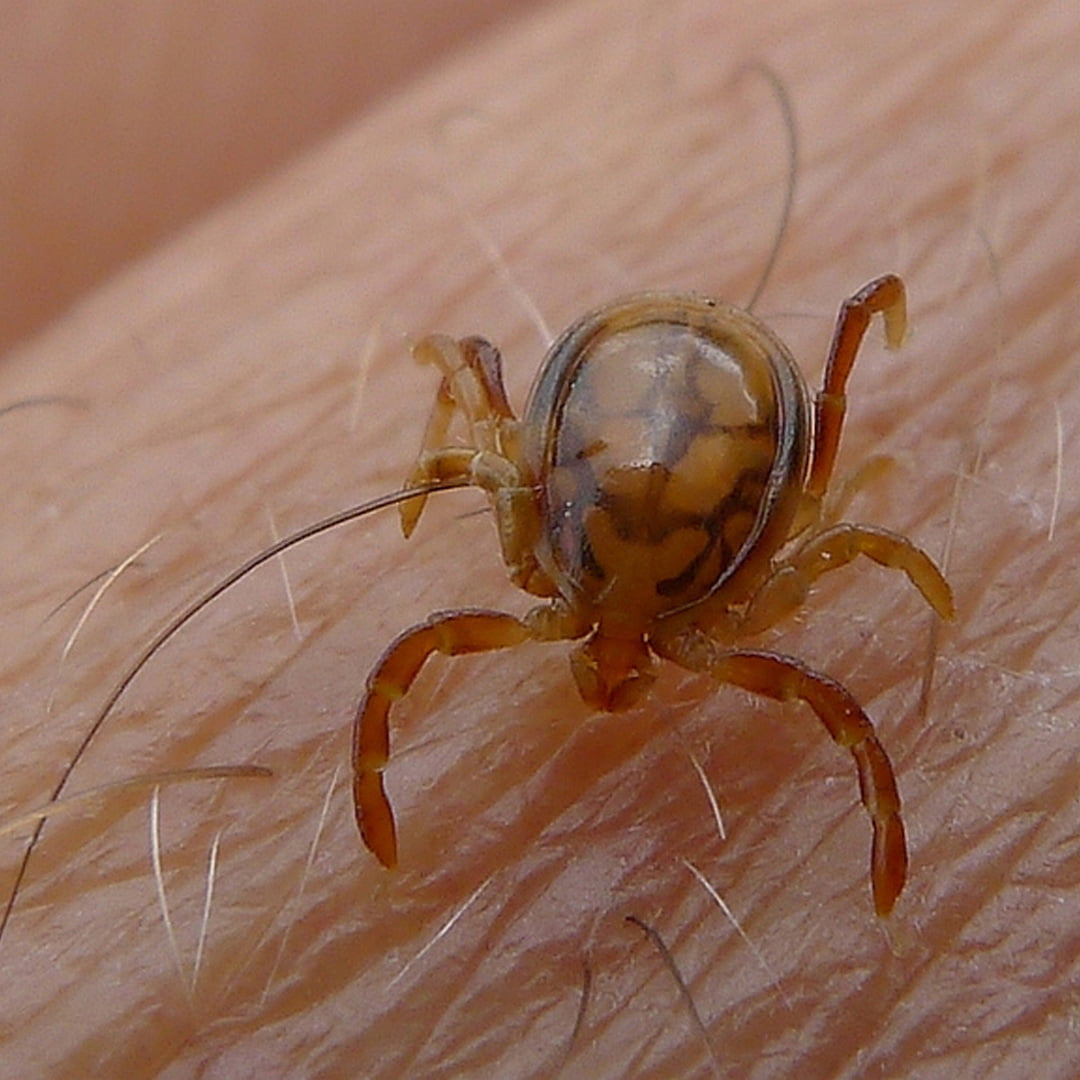
You can get tick-borne encephalitis from a bite from a tick infected with TBE, the European variant found in much of Europe, except in the Benelux and northern Scandinavia. There's also a Russian variant (RSSE) that can cause tick-borne encephalitis. This variant is found in the south of the former Soviet Union, Kazakhstan, northeast China, Japan, and Mongolia.
On average, tick-borne encephalitis occurs about seven to fourteen days after a tick bite. When drinking unpasteurized milk, the time between infection and illness is about three or four days.
It's often the case that infected people don't even realize they are infected. They go through the illness unnoticed, without really feeling sick. People who do get sick often experience flu-like symptoms and fever. In a small portion of infected people, a brain inflammation occurs one to three days after the disappearance of the symptoms. With the European variant of tick-borne encephalitis, about one percent die due to brain inflammation. For the Russian variant, this percentage is slightly higher.
There are no medications to treat tick-borne encephalitis, but you can get vaccinated against this disease. It may be advisable if you're staying in a natural area in Europe for more than four weeks.