'/%3e%3c/svg%3e)

'%3e%3cpath%20d='M41,17.5H30V11a5.006,5.006,0,0,0-5-5H7a5.006,5.006,0,0,0-5,5V23a5.006,5.006,0,0,0,5,5v2.09A2,2,0,0,0,10.417,31.5a.892.892,0,0,0,.1-.114L13.005,28H18v6.5a5.006,5.006,0,0,0,5,5H34.086l3.5,3.5A2,2,0,0,0,41,41.586V39.5a5.006,5.006,0,0,0,5-5v-12a5.006,5.006,0,0,0-5-5ZM12.5,26a1,1,0,0,0-.8.407L9,30.067V27a1,1,0,0,0-1-1H7a3,3,0,0,1-3-3V11A3,3,0,0,1,7,8H25a3,3,0,0,1,3,3v6.5H23a4.957,4.957,0,0,0-2.951.985l-3.139-6.9a1,1,0,0,0-1.82,0l-5,11a1,1,0,0,0,.5,1.324A.982.982,0,0,0,11,24a1,1,0,0,0,.91-.586L13.462,20H18.54l.071.155A4.939,4.939,0,0,0,18,22.5V26Zm5.131-8h-3.26L16,14.416ZM44,34.5a3,3,0,0,1-3,3H40a1,1,0,0,0-1,1v3.086l-3.793-3.793A1,1,0,0,0,34.5,37.5H23a3,3,0,0,1-3-3v-12a3,3,0,0,1,3-3H41a3,3,0,0,1,3,3Z'%20fill='%23fff'/%3e%3cpath%20d='M37,25H33V23a1,1,0,0,0-2,0v2H27a1,1,0,0,0,0,2h7.42a6.96,6.96,0,0,1-2.426,4.348A6.974,6.974,0,0,1,30.171,29a1,1,0,1,0-1.806.858A8.863,8.863,0,0,0,30.24,32.43a7.128,7.128,0,0,1-2.811.57.97.97,0,0,0-.965,1A1.031,1.031,0,0,0,27.5,35a8.932,8.932,0,0,0,4.52-1.23A9.127,9.127,0,0,0,36.571,35a.97.97,0,0,0,.965-1A1.031,1.031,0,0,0,36.5,33a6.949,6.949,0,0,1-2.72-.566A8.97,8.97,0,0,0,36.441,27H37a1,1,0,0,0,0-2Z'%20fill='%23fff'/%3e%3c/g%3e%3c/svg%3e)

'%20fill='none'%20stroke='%23fff'%20stroke-linecap='round'%20stroke-linejoin='round'%20stroke-width='1.5'/%3e%3c/svg%3e)
'/%3e%3c/svg%3e)
Late Lyme disease
When Lyme disease is present for more than a year, the skin may turn red/purple. This skin condition, where the skin becomes very thin, usually occurs on the arms and legs.
 Rovince
 22-04-2025 12:09
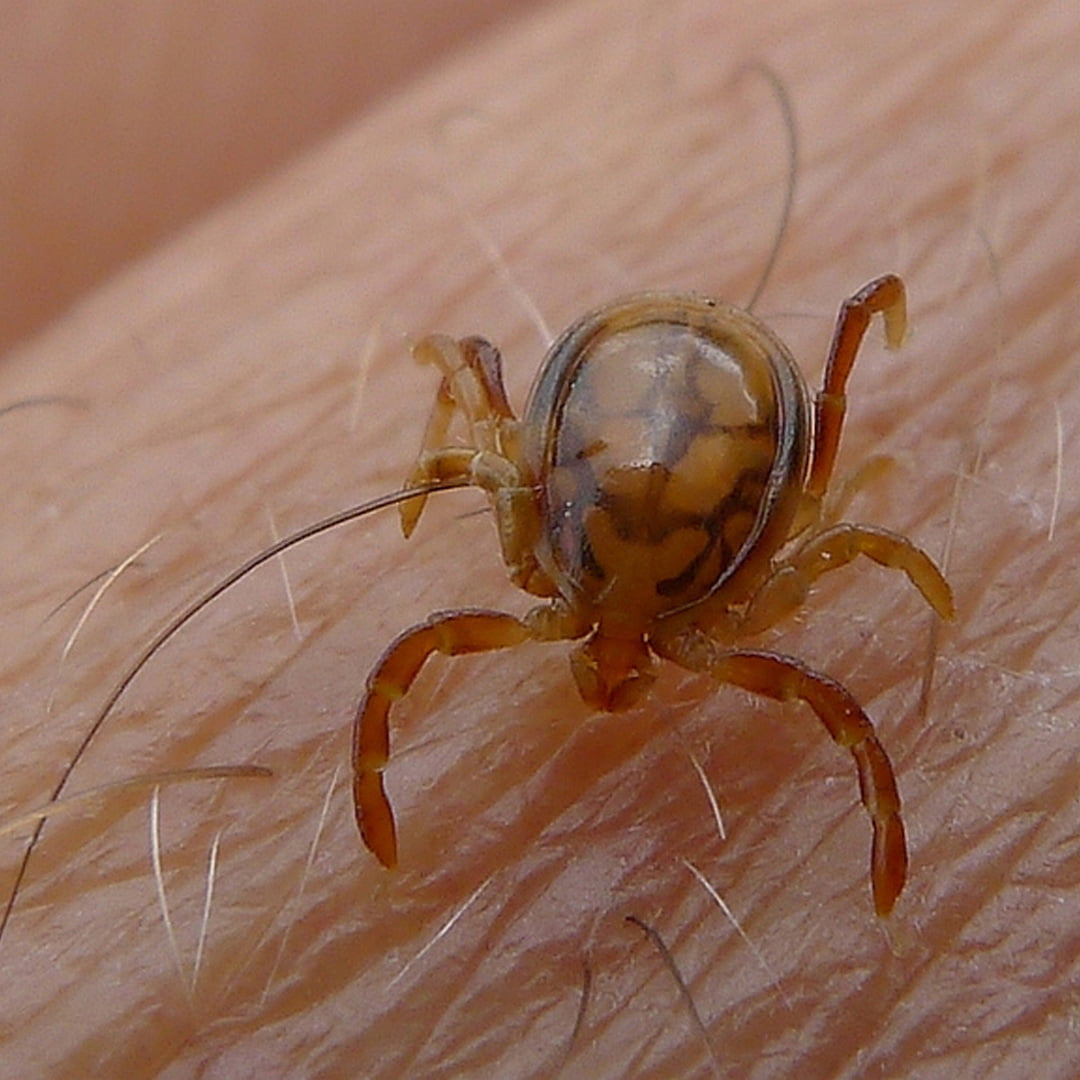
A tick bite is not really noticeable. Therefore, it is difficult to identify the bite. It is advisable to check your body for possible ticks after a visit to places like a forest or park.
After a tick bite, various symptoms may occur. Noticeable symptoms include headaches, fever, a stiff neck, or muscle aches. There may also be pains in the nervous system, joints, or around the heart. These symptoms are associated with Lyme disease. Lyme disease is divided into three stages.
After a tick bite, a red ring (erythema migrans) can appear on the skin. It may take up to three months for the ring to become visible. In this phase of the disease, the symptoms are flu-like (headache, fever, or muscle pain). If you have these symptoms, you should visit your doctor.
In this stage of Lyme disease, you may experience issues with the nervous system, inflamed or swollen joints, and sometimes the heart. These symptoms can last for several months.
When Lyme disease is present for more than a year, the skin may turn red/purple. This skin condition, where the skin becomes very thin, usually occurs on the arms and legs.