'/%3e%3c/svg%3e)

'%3e%3cpath%20d='M41,17.5H30V11a5.006,5.006,0,0,0-5-5H7a5.006,5.006,0,0,0-5,5V23a5.006,5.006,0,0,0,5,5v2.09A2,2,0,0,0,10.417,31.5a.892.892,0,0,0,.1-.114L13.005,28H18v6.5a5.006,5.006,0,0,0,5,5H34.086l3.5,3.5A2,2,0,0,0,41,41.586V39.5a5.006,5.006,0,0,0,5-5v-12a5.006,5.006,0,0,0-5-5ZM12.5,26a1,1,0,0,0-.8.407L9,30.067V27a1,1,0,0,0-1-1H7a3,3,0,0,1-3-3V11A3,3,0,0,1,7,8H25a3,3,0,0,1,3,3v6.5H23a4.957,4.957,0,0,0-2.951.985l-3.139-6.9a1,1,0,0,0-1.82,0l-5,11a1,1,0,0,0,.5,1.324A.982.982,0,0,0,11,24a1,1,0,0,0,.91-.586L13.462,20H18.54l.071.155A4.939,4.939,0,0,0,18,22.5V26Zm5.131-8h-3.26L16,14.416ZM44,34.5a3,3,0,0,1-3,3H40a1,1,0,0,0-1,1v3.086l-3.793-3.793A1,1,0,0,0,34.5,37.5H23a3,3,0,0,1-3-3v-12a3,3,0,0,1,3-3H41a3,3,0,0,1,3,3Z'%20fill='%23fff'/%3e%3cpath%20d='M37,25H33V23a1,1,0,0,0-2,0v2H27a1,1,0,0,0,0,2h7.42a6.96,6.96,0,0,1-2.426,4.348A6.974,6.974,0,0,1,30.171,29a1,1,0,1,0-1.806.858A8.863,8.863,0,0,0,30.24,32.43a7.128,7.128,0,0,1-2.811.57.97.97,0,0,0-.965,1A1.031,1.031,0,0,0,27.5,35a8.932,8.932,0,0,0,4.52-1.23A9.127,9.127,0,0,0,36.571,35a.97.97,0,0,0,.965-1A1.031,1.031,0,0,0,36.5,33a6.949,6.949,0,0,1-2.72-.566A8.97,8.97,0,0,0,36.441,27H37a1,1,0,0,0,0-2Z'%20fill='%23fff'/%3e%3c/g%3e%3c/svg%3e)


'%20fill='none'%20stroke='%23fff'%20stroke-linecap='round'%20stroke-linejoin='round'%20stroke-width='1.5'/%3e%3c/svg%3e)
'/%3e%3c/svg%3e)
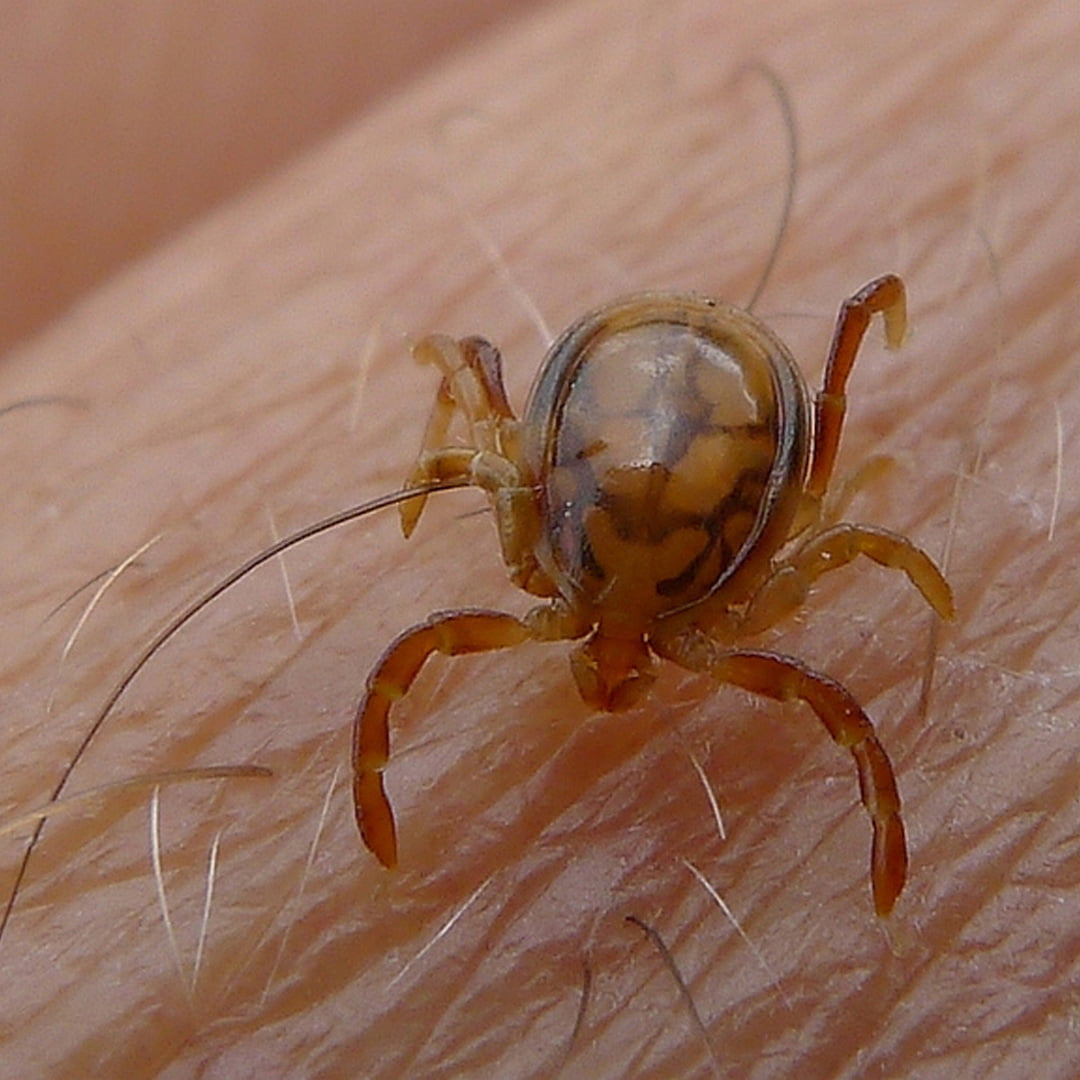

Ticks along the coast in Italy
It is also not entirely safe along the Italian coast, as there are many ticks to be found there as well. The tick species Rhipicephalus is primarily found in countries around the Mediterranean and transmits the disease Fièvre Boutonneuse there. These ticks live in places with a lot of greenery and in warm and humid spots, so they can also survive indoors. They are also commonly found on rodents, antelopes, livestock, or pets.
The virus spread by this tick is characterized by a sore with a black crust at the site of the bite, where redness also develops. Subsequently, symptoms like headaches, muscle pain, and joint pain often occur and are usually accompanied by a lowered blood pressure, sometimes with neurological abnormalities and kidney function disruption. After approximately five to seven days, fever sets in, which can last from a few days to two weeks. After five days, red spots usually appear on the body as well. There is no vaccine against this disease, but an antibiotic course is available.