'/%3e%3c/svg%3e)

'%3e%3cpath%20d='M41,17.5H30V11a5.006,5.006,0,0,0-5-5H7a5.006,5.006,0,0,0-5,5V23a5.006,5.006,0,0,0,5,5v2.09A2,2,0,0,0,10.417,31.5a.892.892,0,0,0,.1-.114L13.005,28H18v6.5a5.006,5.006,0,0,0,5,5H34.086l3.5,3.5A2,2,0,0,0,41,41.586V39.5a5.006,5.006,0,0,0,5-5v-12a5.006,5.006,0,0,0-5-5ZM12.5,26a1,1,0,0,0-.8.407L9,30.067V27a1,1,0,0,0-1-1H7a3,3,0,0,1-3-3V11A3,3,0,0,1,7,8H25a3,3,0,0,1,3,3v6.5H23a4.957,4.957,0,0,0-2.951.985l-3.139-6.9a1,1,0,0,0-1.82,0l-5,11a1,1,0,0,0,.5,1.324A.982.982,0,0,0,11,24a1,1,0,0,0,.91-.586L13.462,20H18.54l.071.155A4.939,4.939,0,0,0,18,22.5V26Zm5.131-8h-3.26L16,14.416ZM44,34.5a3,3,0,0,1-3,3H40a1,1,0,0,0-1,1v3.086l-3.793-3.793A1,1,0,0,0,34.5,37.5H23a3,3,0,0,1-3-3v-12a3,3,0,0,1,3-3H41a3,3,0,0,1,3,3Z'%20fill='%23fff'/%3e%3cpath%20d='M37,25H33V23a1,1,0,0,0-2,0v2H27a1,1,0,0,0,0,2h7.42a6.96,6.96,0,0,1-2.426,4.348A6.974,6.974,0,0,1,30.171,29a1,1,0,1,0-1.806.858A8.863,8.863,0,0,0,30.24,32.43a7.128,7.128,0,0,1-2.811.57.97.97,0,0,0-.965,1A1.031,1.031,0,0,0,27.5,35a8.932,8.932,0,0,0,4.52-1.23A9.127,9.127,0,0,0,36.571,35a.97.97,0,0,0,.965-1A1.031,1.031,0,0,0,36.5,33a6.949,6.949,0,0,1-2.72-.566A8.97,8.97,0,0,0,36.441,27H37a1,1,0,0,0,0-2Z'%20fill='%23fff'/%3e%3c/g%3e%3c/svg%3e)


'%20fill='none'%20stroke='%23fff'%20stroke-linecap='round'%20stroke-linejoin='round'%20stroke-width='1.5'/%3e%3c/svg%3e)
'/%3e%3c/svg%3e)

Tick Disease Fièvre Boutonneuse
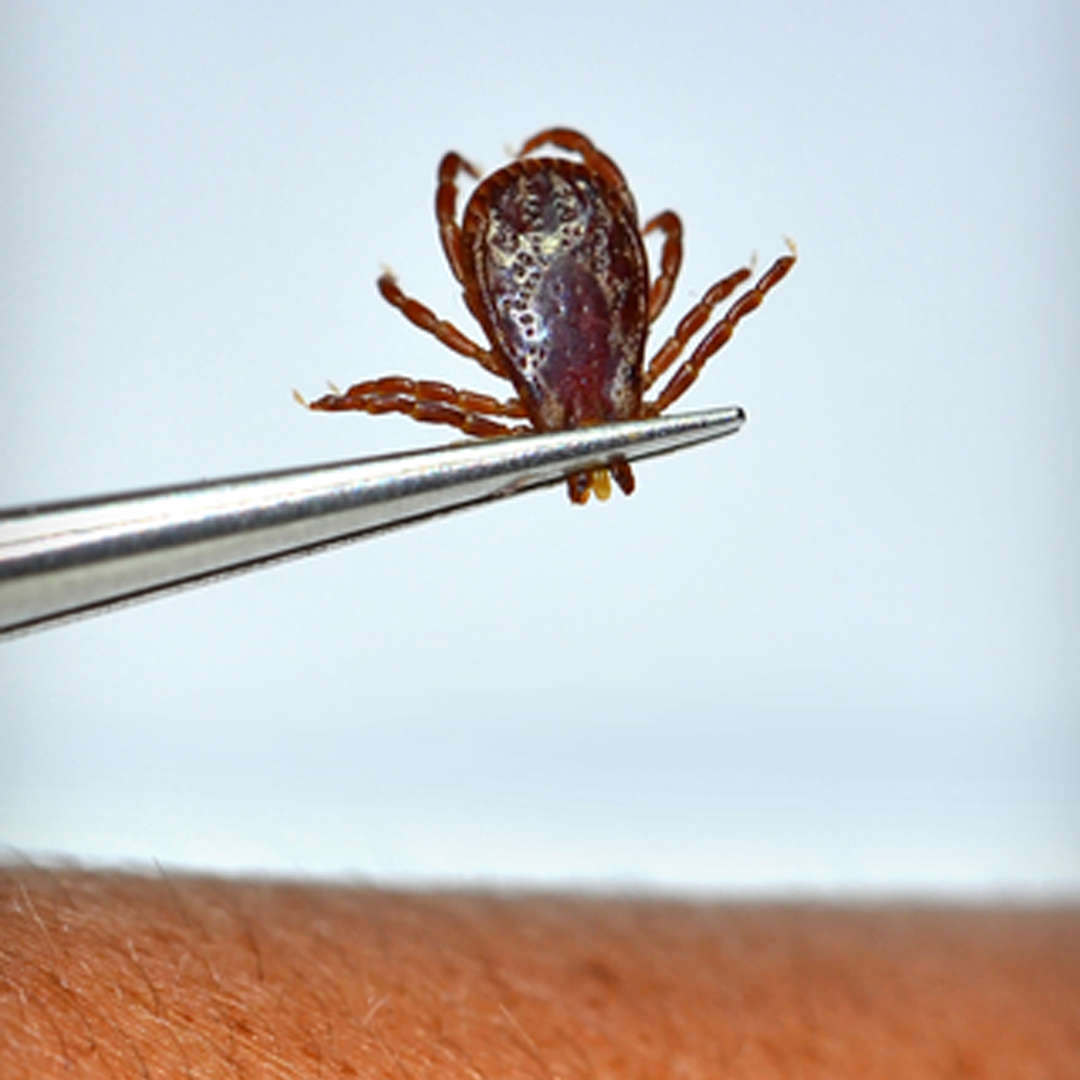
The Rhipicephalus Sanguineus transmits the disease Fièvre Boutonneuse. The first visible symptom of this disease is a sore with a black scab and red discoloration of the skin after a tick bite. This can be accompanied by swollen lymph nodes. Headache, muscle pain, and joint pain can occur, and a drop in blood pressure can also result from the infection. Sometimes neurological disorders and a disruption of kidney function occur. Approximately five to seven days after the dog tick bite, chills and fever develop, lasting for several days to two weeks. Red spots also appear all over the body after five days. There is no vaccination against this disease. Usually, an antibiotic course is prescribed to treat Fièvre Boutonneuse. When removing the dog tick, it is important that the tick is removed completely (with legs). Therefore, determine in which stage the tick is based on its color. Then deduce from that standpoint how many legs might be in the skin.