'/%3e%3c/svg%3e)

'%3e%3cpath%20d='M41,17.5H30V11a5.006,5.006,0,0,0-5-5H7a5.006,5.006,0,0,0-5,5V23a5.006,5.006,0,0,0,5,5v2.09A2,2,0,0,0,10.417,31.5a.892.892,0,0,0,.1-.114L13.005,28H18v6.5a5.006,5.006,0,0,0,5,5H34.086l3.5,3.5A2,2,0,0,0,41,41.586V39.5a5.006,5.006,0,0,0,5-5v-12a5.006,5.006,0,0,0-5-5ZM12.5,26a1,1,0,0,0-.8.407L9,30.067V27a1,1,0,0,0-1-1H7a3,3,0,0,1-3-3V11A3,3,0,0,1,7,8H25a3,3,0,0,1,3,3v6.5H23a4.957,4.957,0,0,0-2.951.985l-3.139-6.9a1,1,0,0,0-1.82,0l-5,11a1,1,0,0,0,.5,1.324A.982.982,0,0,0,11,24a1,1,0,0,0,.91-.586L13.462,20H18.54l.071.155A4.939,4.939,0,0,0,18,22.5V26Zm5.131-8h-3.26L16,14.416ZM44,34.5a3,3,0,0,1-3,3H40a1,1,0,0,0-1,1v3.086l-3.793-3.793A1,1,0,0,0,34.5,37.5H23a3,3,0,0,1-3-3v-12a3,3,0,0,1,3-3H41a3,3,0,0,1,3,3Z'%20fill='%23fff'/%3e%3cpath%20d='M37,25H33V23a1,1,0,0,0-2,0v2H27a1,1,0,0,0,0,2h7.42a6.96,6.96,0,0,1-2.426,4.348A6.974,6.974,0,0,1,30.171,29a1,1,0,1,0-1.806.858A8.863,8.863,0,0,0,30.24,32.43a7.128,7.128,0,0,1-2.811.57.97.97,0,0,0-.965,1A1.031,1.031,0,0,0,27.5,35a8.932,8.932,0,0,0,4.52-1.23A9.127,9.127,0,0,0,36.571,35a.97.97,0,0,0,.965-1A1.031,1.031,0,0,0,36.5,33a6.949,6.949,0,0,1-2.72-.566A8.97,8.97,0,0,0,36.441,27H37a1,1,0,0,0,0-2Z'%20fill='%23fff'/%3e%3c/g%3e%3c/svg%3e)


'%20fill='none'%20stroke='%23fff'%20stroke-linecap='round'%20stroke-linejoin='round'%20stroke-width='1.5'/%3e%3c/svg%3e)
'/%3e%3c/svg%3e)
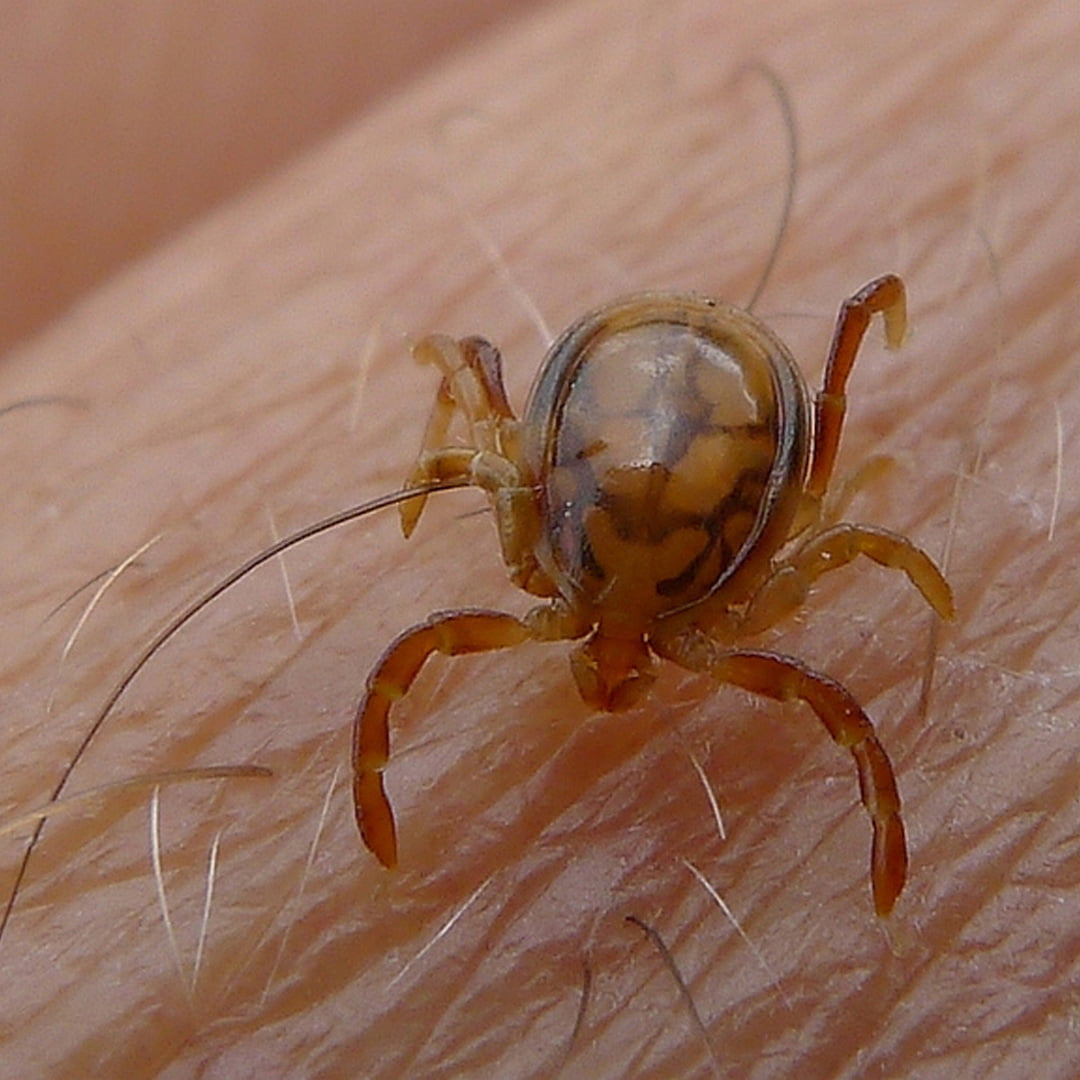

The transmission of diseases by Ixodes Ricinus
The most well-known disease transmitted by Ixodes Ricinus is Lyme disease, caused by the Borrelia bacterium. The disease is characterized by a red circular spot at the site of the tick bite, followed by fever and flu-like symptoms. At a later stage, the bacterium can also affect the joints, nervous system, and heart. The disease is rarely fatal, so treatment with antibiotics is necessary.
In the Netherlands, Ixodes Ricinus only spreads Lyme disease, but abroad, the tick is also known as the carrier of Tick-borne Encephalitis (TBE). Ixodes Ricinus transmits this disease immediately after the tick bite. A week after the bite, fever and flu can occur. One in three infected people also experiences meningitis. This is often accompanied by headache, dizziness, and stiffness of the neck, shoulders, and back. This disease can also be deadly. It is possible to get vaccinated against Tick-borne Encephalitis.
A slightly less known disease that Ixodes Ricinus can transmit is Human Granulocytic Ehrlichiosis (HGE). The symptoms include fever, headache, and muscle pain. Liver dysfunctions are also possible complaints. Symptoms usually occur within a week after the bite. They can be treated with an antibiotic.