'/%3e%3c/svg%3e)

'%3e%3cpath%20d='M41,17.5H30V11a5.006,5.006,0,0,0-5-5H7a5.006,5.006,0,0,0-5,5V23a5.006,5.006,0,0,0,5,5v2.09A2,2,0,0,0,10.417,31.5a.892.892,0,0,0,.1-.114L13.005,28H18v6.5a5.006,5.006,0,0,0,5,5H34.086l3.5,3.5A2,2,0,0,0,41,41.586V39.5a5.006,5.006,0,0,0,5-5v-12a5.006,5.006,0,0,0-5-5ZM12.5,26a1,1,0,0,0-.8.407L9,30.067V27a1,1,0,0,0-1-1H7a3,3,0,0,1-3-3V11A3,3,0,0,1,7,8H25a3,3,0,0,1,3,3v6.5H23a4.957,4.957,0,0,0-2.951.985l-3.139-6.9a1,1,0,0,0-1.82,0l-5,11a1,1,0,0,0,.5,1.324A.982.982,0,0,0,11,24a1,1,0,0,0,.91-.586L13.462,20H18.54l.071.155A4.939,4.939,0,0,0,18,22.5V26Zm5.131-8h-3.26L16,14.416ZM44,34.5a3,3,0,0,1-3,3H40a1,1,0,0,0-1,1v3.086l-3.793-3.793A1,1,0,0,0,34.5,37.5H23a3,3,0,0,1-3-3v-12a3,3,0,0,1,3-3H41a3,3,0,0,1,3,3Z'%20fill='%23fff'/%3e%3cpath%20d='M37,25H33V23a1,1,0,0,0-2,0v2H27a1,1,0,0,0,0,2h7.42a6.96,6.96,0,0,1-2.426,4.348A6.974,6.974,0,0,1,30.171,29a1,1,0,1,0-1.806.858A8.863,8.863,0,0,0,30.24,32.43a7.128,7.128,0,0,1-2.811.57.97.97,0,0,0-.965,1A1.031,1.031,0,0,0,27.5,35a8.932,8.932,0,0,0,4.52-1.23A9.127,9.127,0,0,0,36.571,35a.97.97,0,0,0,.965-1A1.031,1.031,0,0,0,36.5,33a6.949,6.949,0,0,1-2.72-.566A8.97,8.97,0,0,0,36.441,27H37a1,1,0,0,0,0-2Z'%20fill='%23fff'/%3e%3c/g%3e%3c/svg%3e)


'%20fill='none'%20stroke='%23fff'%20stroke-linecap='round'%20stroke-linejoin='round'%20stroke-width='1.5'/%3e%3c/svg%3e)
'/%3e%3c/svg%3e)
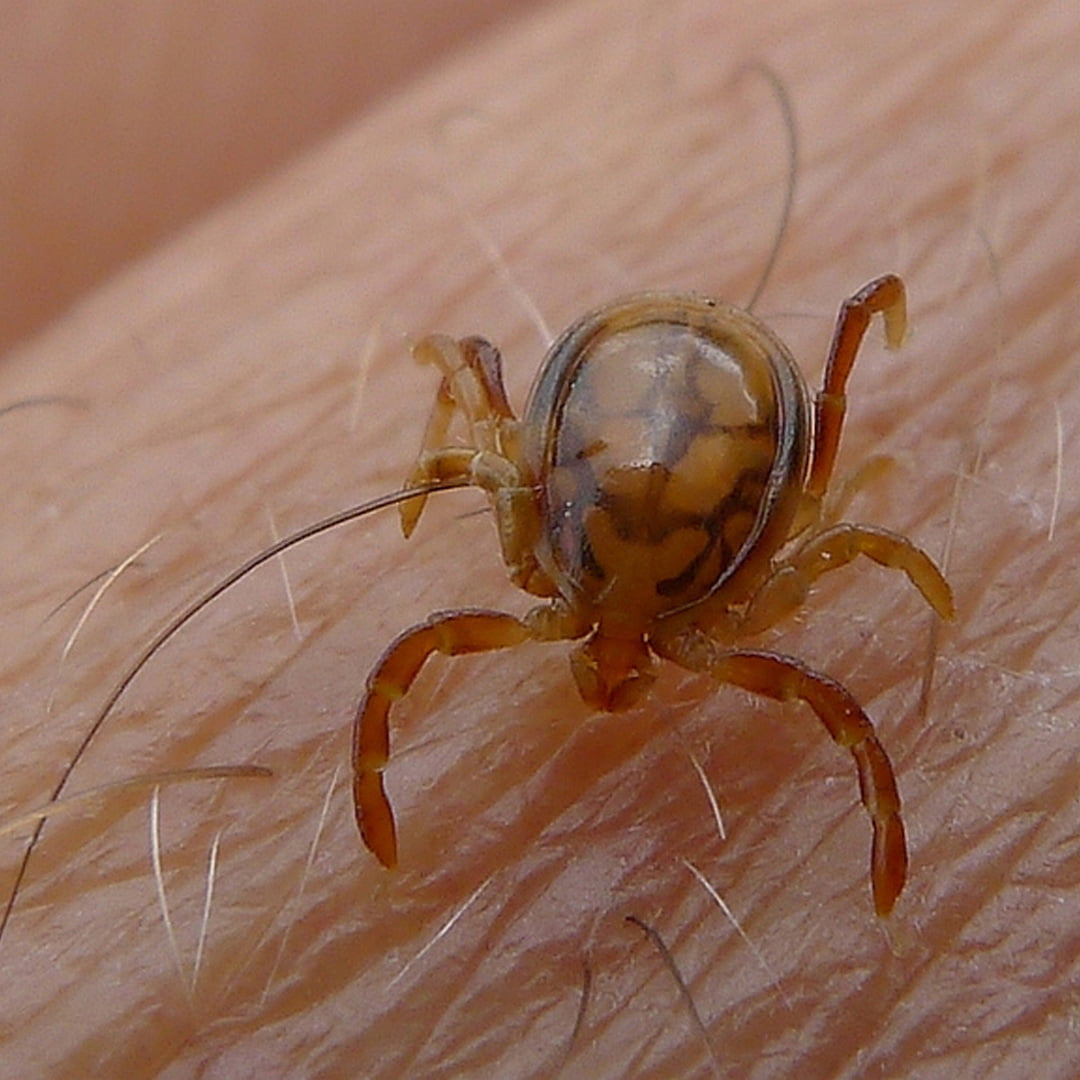

Life-threatening Crimean-Congo fever from Hyalomma
The Hyalomma tick is seen as one of the transmitters of the Crimean-Congo virus, which results in thirty to fifty percent of infected people dying. The first symptom of the Crimean-Congo fever is flu with nosebleeds. After a few days, the liver begins to swell and subcutaneous hemorrhages occur. It is also quite possible that vital organs stop functioning. There is no treatment for this life-threatening disease, so avoiding infection is of utmost importance.